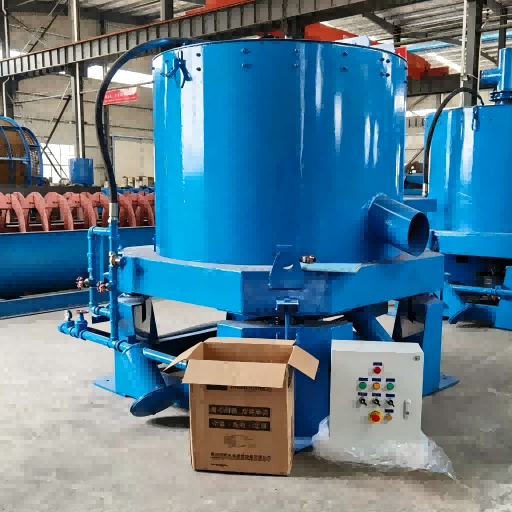
How Often Should I Replace Hydrocyclone Liners?
Oct 20, 2026
 admin
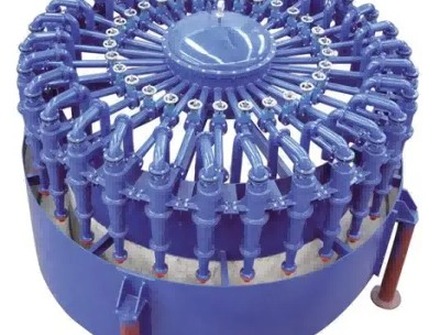
admin A hydrocyclone is a passive classification device that uses centrifugal force to separate solid particles from liquid in a slurry stream. For tailings treatment, the hydrocyclone splits the feed into:
Hydrocyclones are widely used in tailings management for gold, copper, iron ore, lithium, and coal processing plants. At HUATAO, we manufacture high-performance hydrocyclones and Cyclone Liners designed specifically for demanding tailings applications.
The hydrocyclone operates without moving parts. Here is how it works:
Step 1: Slurry enters the cyclone tangentially under pressure through the inlet.
Step 2: A high-speed vortex develops inside the cyclone body.
Step 3: Coarse and dense particles move toward the outer wall and travel downward.
Step 4: Fine and light particles move toward the central vortex.
Step 5: Fine particles exit through the overflow (Vortex Finder).
Step 6: Coarse particles exit through the underflow (Apex).
The efficiency of this separation depends on:
At HUATAO, every Vortex Finder and Apex is machined to precise tolerances to ensure consistent classification performance.
| Benefit | Description |
|---|---|
| Low operating cost | No moving parts, minimal energy consumption |
| High capacity | Single units can handle hundreds of cubic meters per hour |
| Small footprint | Requires minimal plant space compared to thickeners or classifiers |
| Adjustable cut size | Cut size can be modified by changing apex, vortex finder, or feed pressure |
| Low maintenance | Only wear liners require periodic replacement |
| Dewatering capability | Produces a high-density underflow suitable for dry stacking |
| Wide material compatibility | Handles tailings from most ore types |
HUATAO’s polyurethane Cyclone Liners are engineered to deliver consistent wear life, reducing downtime and maintenance costs.
| Application | Description |
|---|---|
| Dry stacking | Produces high-density underflow for conveyor or truck transport |
| Dam wall construction | Coarse underflow used for building tailings storage facility walls |
| Water recovery | Overflow returns water to the plant, reducing fresh water demand |
| Desliming | Removes fine clay particles from coarse tailings |
| Classification ahead of filtration | Improves filter press performance by removing oversized particles |
| Beach grading | Controls particle size distribution on the tailings beach |
Hydrocyclones are effective for dewatering tailings because they split the stream into a coarse, fast-settling underflow for wall construction and a fine overflow for the basin. HUATAO has supplied hydrocyclones for tailings treatment projects across gold, copper, iron ore, and lithium mines worldwide.
To verify true manufacturing ownership, move beyond marketing brochures and generic certificates.
Action steps:
The particle size distribution of the feed directly determines dewatering behavior; coarse fractions can be pumped at high solids contents, while fine fractions become rigid and stackable. This performance depends entirely on precision-manufactured internal components. At HUATAO, we own our entire production chain—from polyurethane casting to final assembly.
Videos and certificates are helpful as an initial filter, but they are not sufficient for a final purchasing decision.
Validation steps:
HUATAO provides independent material certificates and can connect you with existing customers operating our hydrocyclones on similar tailings applications.
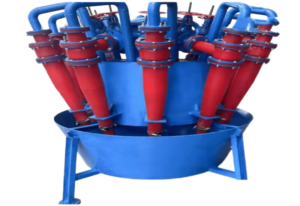
A well-planned factory audit is your single best tool to separate real manufacturers from traders.
| Inspection Area | What to Look For | HUATAO Standard |
|---|---|---|
| Mould and tooling condition | Precision-machined moulds without visible wear. Does the supplier maintain moulds in-house? | All moulds precision-machined and maintained in-house |
| Liner material consistency | Polyurethane: no bubbles, soft spots, or uneven color. Ceramic: no cracks, porosity, or inconsistent glaze. | Strict quality control with batch traceability |
| Apex and vortex finder dimensions | Measure critical diameters with a caliper. Deviations beyond ±0.5 mm will alter cut size. | Tolerances held to ±0.3 mm |
| Assembly fit-up | Test-fit an apex, vortex finder, and liner into a cyclone body. Poor fit causes bypass and short-circuiting. | 100% assembly fit testing before shipment |
Apex and vortex finder diameters are the two most significant operational parameters for controlling cut size and recovery when treating fine tailings. If a supplier cannot manufacture these to precise tolerances, your separation performance will suffer. HUATAO’s quality control system ensures every Apex and Vortex Finder meets dimensional specifications.
When two suppliers present nearly identical drawings and performance curves, dig deeper into these differentiators:
| Comparison Factor | What to Ask | HUATAO Advantage |
|---|---|---|
| Wear life data | Request real plant wear records—hours to first replacement, not theoretical estimates. | Real wear data from gold, copper, and iron ore tailings plants |
| Spare parts availability | Ask for a price and lead time list for apexes, vortex finders, and liners. Stocked parts matter more than low initial price. | Standard apex and vortex finder sizes in stock for immediate shipment |
| Engineering support | Will they help troubleshoot roping, low underflow density, or pressure instability after sale? | Full engineering support before and after sale |
| Customization capability | Can they modify cone angle, apex design, or liner material for your specific tailings? | Custom designs available for specific tailings characteristics |
| Batch traceability | Does each liner have a date stamp and material batch code for quality tracking? | Every liner is date-stamped and batch-coded |
Reducing the vortex finder diameter forces more fine material to report to the underflow, which decreases product grade but increases overall solids recovery. This adjustment only works reliably when the vortex finder is dimensionally perfect.
The optimum hydrocyclone for tailings treatment is not necessarily the one with the finest cut, but the one that produces an underflow particle distribution specifically tailored to the requirements of downstream dewatering or deposition equipment. HUATAO’s engineers work with you to define the right performance target—not just the highest efficiency number on a datasheet.
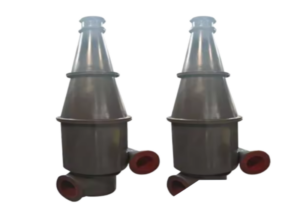
| Factor | Polyurethane | Ceramic | Rubber |
|---|---|---|---|
| Wear resistance | High | Extremely High | Moderate |
| Impact resistance | Excellent | Moderate | Excellent |
| Weight | Light | Heavy | Light |
| Installation | Easy | Complex | Easy |
| Cost | Moderate | High | Low |
| Service life | 6–18 months | 18–36 months | 3–9 months |
| Best application | General tailings | Highly abrasive ore | Low abrasion, high impact |
| HUATAO offering | ✅ Premium polyurethane | ✅ Ceramic-lined | ✅ Rubber-lined |
For most tailings applications, polyurethane offers the best balance between cost, wear life, and ease of replacement. HUATAO’s polyurethane Cyclone Liners are engineered with high tear strength polyurethane for extended service life.
| Ore Type | Recommended Hydrocyclone Solution | HUATAO Solution |
|---|---|---|
| Gold Tailings | Polyurethane-lined hydrocyclone | ✅ PU Cyclone Liners |
| Copper Tailings | Ceramic-lined hydrocyclone | ✅ Ceramic Liners |
| Iron Ore Tailings | Rubber-lined hydrocyclone | ✅ Rubber Liners |
| Lithium Tailings | High-efficiency polyurethane cyclone | ✅ PU Fine Cyclone |
| Coal Tailings | Polyurethane hydrocyclone | ✅ PU Cyclone |
| Silica Sand Tailings | Fine classification cyclone | ✅ Fine PU Cyclone |
When requesting a quotation from HUATAO or any supplier, prepare the following:
| Information | Description | Why It Matters |
|---|---|---|
| Ore type | Gold, copper, iron ore, coal, lithium, etc. | Determines liner material selection |
| Tailings characteristics | Particle size distribution, solids concentration, density | Affects cut size and wear rate |
| Flow rate | m³/h or TPH | Determines cyclone size and quantity |
| Target cut size (d50) | Microns (µm) | Guides apex and vortex finder selection |
| Feed pressure available | kPa or bar | Critical for performance stability |
| Liner material preference | Polyurethane, ceramic, rubber | Impacts wear life and cost |
| OEM part numbers | If replacing existing equipment | Ensures dimensional compatibility |
HUATAO meets all requirements on this checklist.
| Problem | Possible Cause | Recommended Solution | HUATAO Support |
|---|---|---|---|
| Roping | Apex too small | Increase apex diameter | HUATAO provides apex sizing guidance |
| Poor classification | Feed pressure variation | Stabilize feed pump VFD | Engineering support for system design |
| Low underflow density | Vortex finder too small | Increase vortex finder diameter | Vortex finder replacement in stock |
| Excessive wear | Abrasive ore, wrong liner material | Upgrade to ceramic or polyurethane | Multiple liner material options |
| Frequent liner replacement | Low-quality polyurethane | Use premium polyurethane with higher tear strength | HUATAO premium polyurethane |
| Short-circuiting | Worn apex or vortex finder | Replace worn components | Same-day spare parts shipping |
| Overflow too coarse | Vortex finder too large | Reduce vortex finder diameter | Precision-machined vortex finders |
| Underflow too wet | Apex too large | Reduce apex diameter | Precision-machined apexes |
Pro tip from HUATAO: Liner life should match your planned maintenance schedule. If you shut down every three months for other equipment, a polyurethane liner that costs less and is easier to replace may be more economical than a ceramic liner that lasts two years. HUATAO can help you select the optimal liner material based on your maintenance schedule and wear conditions.
| Item | Detail |
|---|---|
| Customer Type | Gold Processing Plant |
| Ore Type | Gold Ore |
| Tailings Capacity | 250 TPH |
| Previous Supplier | Local trading company (outsourced liners) |
| Problem | High circulating load, low underflow density for dry stacking, unstable flotation recovery, frequent liner failures due to inconsistent polyurethane quality |
HUATAO Solution:
Result:
Filtering coarse and fine tailings fractions separately after hydrocyclone classification can reduce overall capital expenditure by over USD 100 million on large-scale copper operations. HUATAO has experience designing such two-stage classification systems for major mining projects.
Beyond search engine results, here are critical lessons learned from HUATAO’s decades of experience in mineral processing wear parts:
When evaluating hydrocyclone suppliers for tailings treatment, HUATAO stands out as a genuine manufacturer with full in-house production capabilities. Unlike trading companies that merely assemble components, HUATAO owns its polyurethane casting lines, precision moulds, and quality control laboratories.
What HUATAO delivers:
In high-wear tailings applications, hydrocyclones constructed with polyurethane, ceramic, or reaction-bonded silicon carbide liners significantly reduce downtime and extend component life. HUATAO offers all three options, backed by real plant wear data and application engineering support.
Vacuum-assisted hydrocyclone systems can achieve much higher underflow densities (up to 1.9 t/m³) compared to conventional units, enabling steeper wall slopes on tailings storage facilities. HUATAO’s engineering team helps you design the right classification circuit for your specific tailings characteristics—not a one-size-fits-all solution.
Gas injection into the hydrocyclone chamber can improve solids recovery into the underflow by up to ten percentage points when processing fine particle distributions. HUATAO stays current with advanced separation technologies and can advise you on whether such innovations suit your application.
A divergent (expanding) spigot design can delay the onset of roping discharge, allowing the hydrocyclone to operate at higher solid loading capacities without failing. HUATAO’s design library includes multiple apex geometries to optimize your specific tailings duty.
The optimum hydrocyclone for tailings treatment is not necessarily the one with the finest cut, but the one that produces an underflow particle distribution specifically tailored to the requirements of the downstream dewatering or deposition equipment. HUATAO’s engineers work with you to define the right performance target—not just the highest efficiency number on a datasheet.
1. What is the most important component to inspect in a tailings hydrocyclone?
The apex and vortex finder diameters. Their dimensional accuracy directly controls cut size and recovery. Inspect them with a caliper during a factory audit and ask for QC reports. HUATAO holds tolerances to ±0.3 mm.
2. Can I use a standard hydrocyclone for high-clay tailings?
Not without modifications. High-clay tailings are prone to roping and poor underflow density. A divergent (expanding) spigot design can help, and polyurethane liners are preferred over ceramic to reduce blinding and adhesion. HUATAO offers specialized designs for high-clay tailings.
3. How long should a polyurethane cyclone liner last in tailings service?
Typical wear life ranges from 6 to 18 months depending on slurry abrasiveness, feed pressure, and particle size. Ask the supplier for wear-life data from a plant with similar tailings characteristics to yours. HUATAO provides real plant wear data from similar applications.
4. What is the best liner material for highly abrasive iron ore tailings?
Reaction-bonded silicon carbide or high-density ceramic liners offer the longest life. However, polyurethane provides a good balance of wear resistance and impact tolerance for most tailings applications. HUATAO offers all three options.
5. How do I calculate the required hydrocyclone capacity for my tailings plant?
You need feed slurry flow rate (m³/h), solids concentration (%), and desired cut size (d50). Refer to How Do I Calculate Hydrocyclone Capacity For Mineral Processing for detailed equations.
6. Why does my hydrocyclone keep roping?
Roping usually indicates an apex that is too small relative to the solids loading, unstable feed pressure, or excessive slurry viscosity. Increase the apex diameter first, then stabilize feed pressure using a variable speed pump. HUATAO’s engineering team can help diagnose and resolve roping issues.
7. Can I replace an OEM hydrocyclone apex with an aftermarket part from HUATAO?
Yes. HUATAO provides dimensional drawings and material certificates. All apexes match original fit specifications, and materials (polyurethane, ceramic, rubber) are selected for your wear conditions.
8. Does feed pressure affect tailings hydrocyclone performance?
Yes. Unstable feed pressure is the number one reason tailings hydrocyclones perform poorly. A cyclone may test beautifully at the factory, but once feed pressure fluctuates, roping and inefficiency become chronic. Always audit the entire slurry feed system. HUATAO provides complete system engineering support.
9. What is a divergent spigot design?
A divergent (expanding) spigot design delays the onset of roping discharge, allowing the hydrocyclone to operate at higher solid loading capacities without failing. This is particularly useful for tailings with high fines content. HUATAO’s design library includes multiple apex geometries.
10. Where can I find reliable hydrocyclone suppliers in China for tailings treatment?
Look for suppliers who own their production lines, can provide plant case studies, and export to mining regions. For a vetted supplier, see Where Can I Find Reliable Hydrocyclone Suppliers In China For Mining And Mineral Processing. HUATAO meets all criteria.
Evaluating a hydrocyclone supplier’s real manufacturing capability requires more than reading brochures or watching videos. You must verify ownership of production equipment, inspect dimensional accuracy of critical components like apex and vortex finder, compare suppliers on wear life and support, and apply real-world industry experience to avoid common pitfalls.
The optimum hydrocyclone for tailings treatment is not necessarily the one with the finest cut, but the one that produces an underflow particle distribution specifically tailored to the requirements of downstream dewatering or deposition equipment.
When you need a partner who genuinely manufactures high-performance hydrocyclones and mining wear parts, with full engineering support and transparent quality control, contact HUATAO.
Annie Lu
Email: annie.lu@huataogroup.com
Phone / WhatsApp: +86 180 3242 2676
Website: http://www.tufflexscreen.com
We warmly welcome customers from around the world to contact us and establish mutually beneficial partnerships.
Hydrocyclone Supplier Evaluation, Tailings Treatment Hydrocyclone, Apex, Vortex Finder, Cyclone Liner, Polyurethane Hydrocyclone, Mineral Processing Wear Parts, China Mining Supplier Audit, Tailings Dewatering, HUATAO Hydrocyclone
admin