How Often Should I Replace Hydrocyclone Liners?
Oct 20, 2026
 admin
admin ✔ Flotation impellers directly affect mineral recovery and flotation efficiency.
✔ Polyurethane, rubber, nylon, ceramic composites, and alloy materials are commonly used.
✔ Customized impellers often outperform standard OEM replacements.
✔ Supplier engineering capability is often more valuable than the lowest purchase price.
✔ Proper material selection can significantly extend service life.
✔ Dynamic balancing technology improves operational stability.
✔ Reverse engineering services support older flotation equipment.
✔ The right supplier helps reduce total cost of ownership.
| Item | Description |
|---|---|
| Equipment | Flotation Cell |
| Main Function | Air Dispersion & Slurry Circulation |
| Core Components | Flotation Impeller, Flotation Rotor, Flotation Stator |
| Common Materials | Polyurethane, Rubber, Nylon, Ceramic Composite, Alloy |
| Typical Industries | Gold, Copper, Iron Ore, Lead Zinc, Nickel, Lithium |
| Replacement Type | OEM or Customized |
| Key Benefits | Higher Recovery, Longer Wear Life, Lower Downtime |
| Procurement Method | Drawing, Sample, OEM Part Number |
A flotation impeller is the rotating wear component located inside a flotation cell. It creates slurry movement, disperses air into bubbles, and supports mineral separation.
Without an efficient impeller, flotation cells cannot maintain proper air dispersion or slurry circulation, resulting in lower recovery rates and increased operating costs.
In the mineral processing knowledge graph, flotation impellers connect directly to upstream Classification equipment such as Hydrocyclones and downstream Dewatering systems.
Related reading:
A typical mineral processing flow includes:
Crushing
↓
Screening
↓
Grinding
↓
Classification
↓
Flotation
↓
Dewatering
↓
Filtration
↓
Tailings Management
Flotation impellers operate during the flotation stage and directly affect the performance of:
Their performance can influence the efficiency of downstream Thickener, Filter Press, and Tailings Management systems.
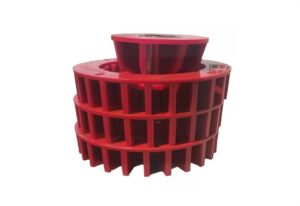
The impeller rotates at high speed and performs three essential functions:
It continuously circulates pulp within the flotation cell.
Air introduced into the cell is broken into fine bubbles.
The generated bubbles capture valuable minerals and transport them to the froth layer.
Efficient impeller design improves:
Several categories of suppliers exist:
Advantages:
Disadvantages:
Advantages:
Advantages:
Well-known suppliers include Multotec, ZJH Minerals, Xinhai Mining, Yantai Jinpeng Mining, HUATAO, and other flotation equipment manufacturers.
| Material | Wear Resistance | Corrosion Resistance | Cost | Typical Application |
|---|---|---|---|---|
| Polyurethane | Excellent | Excellent | Medium | Abrasive ores |
| Rubber | Good | Excellent | Low | General flotation |
| Nylon | Moderate | Good | Medium | Chemical environments |
| Ceramic Composite | Excellent | Excellent | High | Severe wear conditions |
| Alloy Steel | Very Good | Moderate | Medium | Heavy-duty flotation |
Material selection should consider:
Further reading:
| Factor | Polyurethane | Rubber |
|---|---|---|
| Wear Life | Excellent | Good |
| Impact Resistance | Good | Excellent |
| Corrosion Resistance | Excellent | Excellent |
| Cost | Medium | Lower |
| Maintenance Frequency | Lower | Moderate |
| Typical Application | Abrasive Ore | General Ore |
For highly abrasive copper, gold, and nickel ores, polyurethane often delivers lower total ownership costs.
| Industry | Recommended Material | Main Benefit |
|---|---|---|
| Gold Ore | Polyurethane | Extended wear life |
| Copper Ore | Polyurethane | Higher throughput |
| Iron Ore | Alloy Steel | Impact resistance |
| Lead Zinc Ore | Rubber | Cost efficiency |
| Nickel Ore | Polyurethane | Abrasion resistance |
| Lithium Ore | Polyurethane | Chemical stability |
| Phosphate Ore | Rubber | Corrosion resistance |
| Coal Preparation | Rubber | Cost-effective operation |
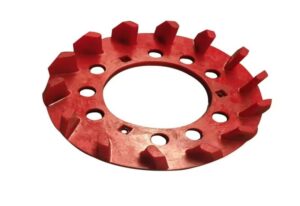
Every flotation plant has unique:
Customized designs can provide:
Wear zones are optimized according to plant conditions.
Improved bubble generation enhances recovery.
Longer replacement intervals reduce downtime.
Many mines recover customization costs within a single maintenance cycle.
When evaluating flotation impeller suppliers, examine:
Can they reproduce:
Suppliers serving Australia, Canada, Chile, Peru, and South Africa often understand international mining standards.
Before requesting a quotation:
Ask suppliers:
Typical production:
| Problem | Cause | Solution |
|---|---|---|
| Premature Wear | Material mismatch | Upgrade material |
| Cracking | Excessive impact | Improve design |
| Vibration | Poor balancing | Dynamic balancing |
| Low Recovery | Poor air dispersion | Optimize geometry |
| High Power Draw | Improper design | CFD optimization |
| Poor Fitment | Dimensional error | Precision machining |
Maintain inventory of:
Preventive maintenance can significantly reduce unplanned shutdowns.
Copper Concentrator
Copper Ore
Standard alloy impellers required replacement every 4 months.
Customized polyurethane flotation impellers were introduced.
Service life depends on ore abrasiveness, material selection, and operating conditions. Polyurethane impellers often last significantly longer than conventional alloy components in abrasive applications.
Yes. Optimized geometry improves air dispersion and slurry circulation, which can increase mineral-bubble interaction and recovery performance.
Many specialized manufacturers produce OEM-compatible impellers based on drawings, samples, or OEM part numbers.
Polyurethane and ceramic composite materials are typically preferred for highly abrasive ore environments.
Many suppliers provide reverse engineering services for obsolete flotation equipment.
Proper balancing reduces vibration, extends bearing life, and improves operational stability.
Machine model, drawings, OEM part number, material requirements, and operating conditions are typically needed.
Review manufacturing capability, engineering expertise, quality control, export experience, and technical support.
Sourcing flotation impellers involves much more than replacing worn parts. The best suppliers combine engineering expertise, advanced material technology, customization capability, and reliable manufacturing processes to deliver long-term operational value.
Whether you need OEM replacement parts or customized flotation wear solutions, selecting the right supplier can improve recovery rates, extend wear life, and significantly reduce operating costs.
Annie Lu
Email: annie.lu@huataogroup.com
Mobile / WhatsApp: +86 18032422676
Website: www.tufflexscreen.com
#FlotationImpeller #FlotationRotor #FlotationStator #MiningWearParts #MineralProcessing #CopperMining #GoldMining #OEMReplacement #MiningEquipment #PolyurethaneWearParts
admin