How Often Should I Replace Hydrocyclone Liners?
Oct 20, 2026
 admin
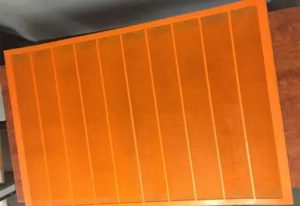
admin Choosing the right polyurethane screen panel is one of the most impactful decisions you can make for your mineral processing operation. The right choice can extend screen media life by 10 times and cut your cost per screened ton in half. The wrong choice leads to frequent replacements, lower throughput, and out-of-spec product.
Here’s a practical framework to guide your selection.
Your feed material dictates the most important selection criteria. Ask yourself:
| Material Characteristic | What It Means for Selection |
|---|---|
| Hardness (Mohs scale) | Hard/abrasive ores (granite, iron ore, basalt) → polyurethane wins on wear life; soft materials (limestone) → woven wire may be more cost-effective |
| Moisture content | Wet/sticky materials → polyurethane’s anti-blinding properties are essential |
| Particle size | Fine cuts (<3 mm) may favor high-tension woven wire for sharpness; larger cuts favor polyurethane |
| Feed rate (TPH) | High tonnage → media life dominates cost per ton; polyurethane usually wins |
Key decision rule: If your feed is hard or abrasive (Mohs >5) and you’re running more than 3,000 hours per year, polyurethane almost always wins on cost per ton.
The aperture determines what passes through and what stays on top.
| Aperture Type | Best For | Trade-Off |
|---|---|---|
| Square | Precise separation, standard sizing | Lower open area |
| Slotted / Rectangular | High-volume throughput, wet screening | Less precise than square |
| Round | Specific particle shapes | Limited availability |
Thumb rule: Fine particles → choose smaller apertures; wet/sticky materials → consider slotted or larger apertures to prevent blinding.
| Panel Type | Advantages | Best For |
|---|---|---|
| Modular | Easy installation and replacement; local replacement of worn sections without changing entire deck | Plants where maintenance downtime is costly; quick-change requirements |
| Tensioned | Larger screening area; stable performance | High-capacity, continuous operations with minimal changeovers |
Note: Modular panels have a higher initial investment, but local replacement capability significantly reduces long-term spare parts costs and downtime.
| Parameter | Impact | Recommendation |
|---|---|---|
| Thickness | Thicker = longer wear life, but lower open area | Standard inclined screens: 25–35 mm; thicker for high impact, thinner for fine separation |
| Hardness (Shore A) | Softer = more flexibility, less blinding; harder = more abrasion resistance | Shore A 85–95 for most mining applications |
The single biggest mistake in screen media selection is buying on panel price instead of cost per ton screened.
Worked example — 200 t/h granite, top deck:
| Wire Mesh | Polyurethane | |
|---|---|---|
| Panel cost | $300 | $1,200 |
| Replacement interval | Every 6 weeks | Every 18 months |
| Tons per panel | 200,000 tons | 2.4 million tons |
| Cost per ton | ~$0.0055 | ~$0.0008 |
The result: The polyurethane panel is ~7× cheaper per screened ton despite being 4× more expensive at purchase.
| Material | Recommended Media |
|---|---|
| Limestone (soft) | Woven wire on all decks |
| Granite, basalt (hard) | Polyurethane on top/middle decks; wire on bottom for fine cuts |
| Iron ore (abrasive) | Polyurethane throughout |
| Coal (wet, clay) | Rubber on impact deck; polyurethane on sizing decks |
| Sand & gravel wash | Polyurethane (high-durometer) throughout |
| Recycled concrete | Rubber on top deck; polyurethane on lower decks |
Don’t run media to failure. Replace when:
Before ordering, confirm:
| Factor | Recommendation |
|---|---|
| Hard/abrasive ores | Polyurethane (12–24 months wear life) |
| Wet/sticky materials | Polyurethane (anti-blinding) |
| Soft, dry materials | Woven wire (higher open area, lower cost) |
| High-throughput | Polyurethane (lower cost per ton) |
| Quick maintenance | Modular panels |
| Fine cuts (<3 mm) | High-tension wire on bottom deck |
No single screen panel is right for every application. The best choice balances your material characteristics, throughput requirements, and maintenance philosophy—always calculated on cost per screened ton, not sticker price.
admin