Rubber Filter Belt for Horizontal Vacuum Belt Filters
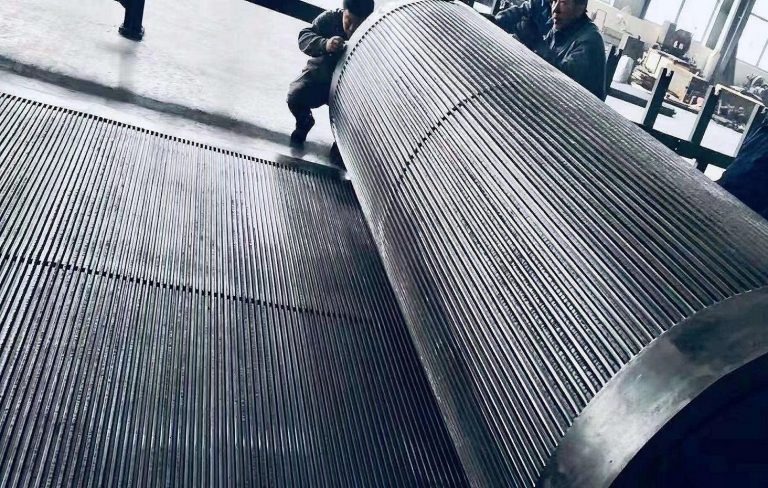
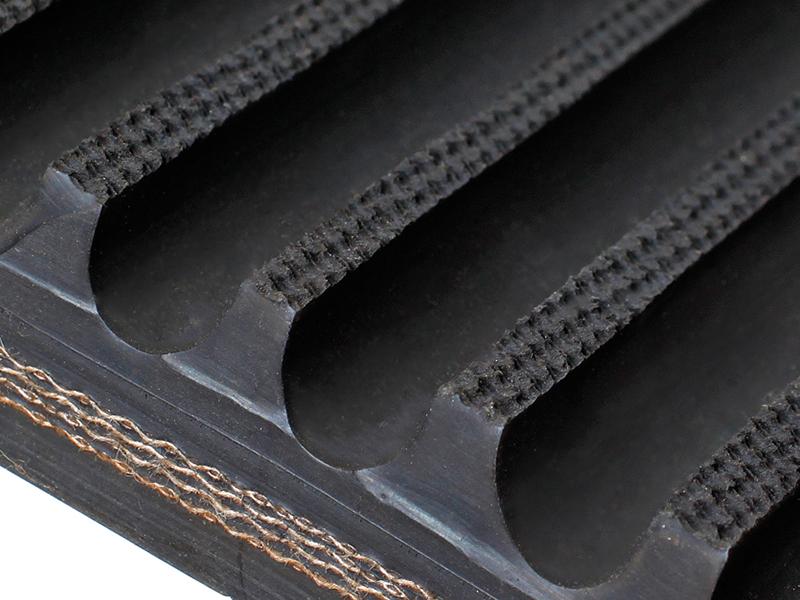
- 01 Optimized Grooves & Holes – Fast filtrate drainage and stable vacuum efficiency.
- 02 Heavy-Duty Carcass – Reinforced EP/NN fabric provides strength and low elongation.
- 03 Custom Rubber Compounds – NR, SBR, EPDM, NBR and CR options available.
- 04 Carcass-Free Center Zone – Helps protect reinforcement from corrosive filtrate.
- 05 OEM Replacement Design – Customized from drawings, dimensions or existing samples.
-
Rubber Filter Belt for Horizontal Vacuum Belt Filters Description
HUATAO Rubber Filter Belts, also known as Vacuum Filter Belts, Rubber Drainage Belts, or Horizontal Vacuum Belt Filter Belts, are heavy-duty filtration components designed for continuous solid-liquid separation and cake washing processes.
Installed beneath the filter cloth of a Horizontal Vacuum Belt Filter (HVBF/HBVF), the rubber drainage belt supports the filter media while its precisely engineered drainage grooves and drainage holes rapidly transfer filtrate toward the vacuum box. This structure helps maintain stable vacuum suction, efficient filtrate removal and continuous cake dewatering.
HUATAO rubber filter belts are engineered for demanding applications involving abrasive, corrosive or high-solids slurries. They can be customized according to filter dimensions, slurry characteristics, operating temperature, chemical environment and existing OEM belt drawings.
They are suitable for new filtration systems as well as replacement rubber belts for horizontal vacuum filters used in mining, mineral processing, metallurgy, chemical processing, fertilizer production, FGD gypsum dewatering and industrial wastewater treatment.
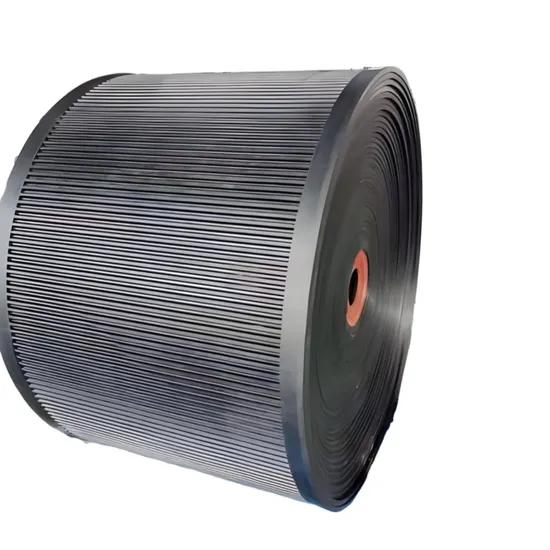
How Does a Rubber Filter Belt Work?
During operation, slurry is distributed onto the moving filter cloth. Vacuum applied beneath the belt draws liquid through the filter cloth, while solid particles remain on the surface and gradually form a filter cake.
The filtrate then enters the grooved rubber filter belt. Molded drainage grooves guide the liquid toward strategically positioned drainage holes, which connect with the vacuum box below. This combination of vacuum suction, filtrate drainage and continuous belt movement enables efficient dewatering and, where required, multi-stage cake washing.
Unlike a conventional conveyor belt, the rubber filter belt is therefore simultaneously a load-bearing belt, filter-cloth support, drainage component and vacuum sealing element.
Engineered Drainage Groove & Hole Design
The drainage system is one of the most important factors affecting vacuum filter performance.
HUATAO grooved rubber filter belts can be manufactured with customized transverse grooves, longitudinal drainage channels, center drainage holes and different hole spacing arrangements. Groove depth, width and pitch can be optimized according to filtration capacity and equipment configuration.
For aggressive chemical applications, a fabric-free / carcass-free center drainage zone can also be designed around the drainage-hole area. This reduces direct contact between corrosive filtrate and the internal reinforcement fabric and helps extend belt service life. This structural approach is also used by established international HVBF manufacturers.


Rubber Compounds for Different Operating Conditions
Different slurry conditions require different elastomer formulations. HUATAO can select the rubber compound according to abrasion, temperature, chemical exposure and oil content.
Natural Rubber (NR) provides excellent elasticity, abrasion resistance and dynamic fatigue performance and is suitable for many mining and mineral-processing applications.
SBR Rubber provides balanced wear resistance and mechanical properties for general industrial filtration.
EPDM Rubber Filter Belts are recommended where improved heat, weathering, oxidation and selected chemical resistance are required.
NBR Rubber Filter Belts are available for applications involving oils, hydrocarbons or other media requiring enhanced oil resistance.
CR / Neoprene can also be selected for specific chemical and environmental operating conditions.
Final compound selection should always be based on actual slurry composition, pH, temperature and operating conditions.
High-Strength Reinforced Belt Construction
The belt body can incorporate multi-ply EP or NN fabric reinforcement to provide the tensile strength required for large horizontal vacuum belt filters.
The reinforced carcass helps control belt elongation and dimensional deformation under continuous tension, slurry loading and vacuum operation. Stable belt geometry also contributes to more reliable tracking and better sealing against the vacuum box.
Optional molded raised edges / side dams / curbs help retain slurry and filter cake within the effective filtration area and reduce side leakage. Dam dimensions can be customized according to the original filter design.
Typical Technical Specifications
| Parameter | Available Options |
|---|---|
| Product | Rubber Filter Belt / Vacuum Filter Belt |
| Filter Type | Horizontal Vacuum Belt Filter |
| Belt Width | Approx. 500–4,800 mm, customized |
| Rubber | NR, SBR, EPDM, NBR, CR |
| Reinforcement | EP / NN multi-ply fabric |
| Surface | Grooved / Slotted / Drainage Channel |
| Drainage | Customized grooves & drainage holes |
| Center Zone | Standard or carcass-free design |
| Edge Design | Flat edge / Raised edge / Side dam |
| Belt Length | Customized to equipment |
| Temperature | According to selected compound |
| Joint | Endless / Engineered connection design |
| Application | Dewatering / Cake Washing / Filtration |
Large industrial HVBF systems can use very wide rubber belts; for reference, ANDRITZ lists belt widths extending to 4.8 m, illustrating the scale at which this type of filtration belt operates.
Applications
Mining & Mineral Processing
Our heavy-duty rubber filter belts for mining are suitable for concentrate and tailings dewatering involving iron ore, magnetite, coal fines, phosphate rock, lithium and other mineral slurries. Horizontal vacuum belt filtration is particularly useful where continuous high-throughput dewatering and cake washing are required.


Metallurgy & Hydrometallurgy
Vacuum filter belts can be used in gold, copper, cobalt, nickel, zinc and other metallurgical processes where washing efficiency, filtrate recovery and stable cake formation are important. Horizontal vacuum belt filters are especially suited to processes requiring multiple washing stages.
Chemical & Fertilizer Industry
Typical applications include phosphoric acid, phosphate processing, potash, titanium dioxide and chemical sludge filtration. Appropriate rubber compounds can be selected for acidic, alkaline, hot or chemically aggressive process environments.
FGD Gypsum & Environmental Treatment
Vacuum filter belts for FGD gypsum dewatering are used in power generation and environmental systems to continuously separate gypsum solids from process water. Rubber drainage belts can also be applied to industrial sludge and wastewater solid-liquid separation.
Why Choose HUATAO Rubber Filter Belts?
Our belts are engineered around the customer’s actual filtration process rather than supplied only according to width and length.
Key parameters such as drainage groove geometry, hole diameter and spacing, belt thickness, rubber compound, reinforcement structure, side-dam dimensions and center drainage zone can be customized according to existing equipment.
For replacement projects, we can manufacture according to the customer’s existing belt drawing or measured dimensions and develop replacement rubber filter belts for horizontal vacuum belt filters.
The objective is to provide stable drainage, reliable vacuum sealing, low elongation, good tracking performance and long wear life under continuous industrial operation.
RFQ – Information Required for Quotation
For accurate selection and quotation, please provide:
- Vacuum filter manufacturer and equipment model
- Rubber belt drawing or existing belt photos
- Belt length × width × total thickness
- Drainage groove width, depth and pitch
- Drainage hole diameter, spacing and arrangement
- Side dam / raised edge dimensions
- Filtered material or slurry name
- Slurry pH and chemical composition
- Operating temperature
- Required rubber material, if specified
- Current belt service life and main failure problem
- Required quantity
For OEM replacement projects, photos of the belt surface, drainage-hole arrangement, edge profile and belt cross-section are especially useful.
Products
PP Filter Press Cloth

Ceramic Lagged Drive Pulley
Vibrating Sluice Box
Compact Alluvial Gold Equipment
Centrifugal Gold Concentrator
Gold Sluice Box
Recent news
See Latest Service