
Hydrocyclones are essential in mineral processing, but they operate under extreme conditions where abrasion and erosion are unavoidable. Continuous exposure to high-speed slurry leads to rapid wear, reducing both equipment lifespan and operational stability.
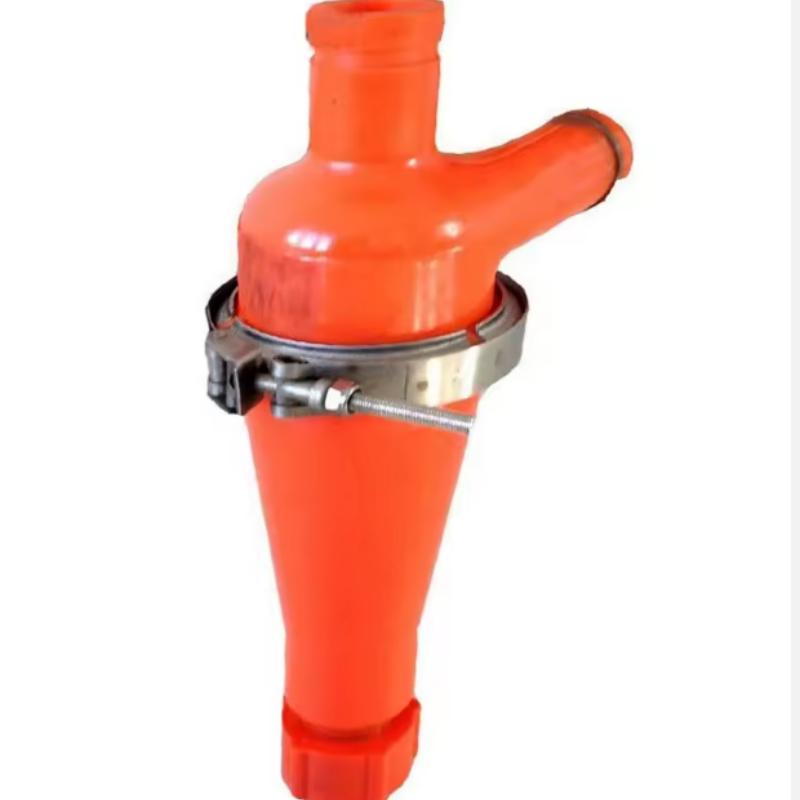
To mitigate these challenges, cyclone liners are used as protective internal components. By isolating the cyclone body from direct contact with abrasive materials, they significantly reduce damage and maintenance frequency.
Among the available materials, polyurethane, rubber and ceramic are the most commonly applied solutions. Each offers different advantages depending on operating conditions.
Polyurethane liners have become the preferred option in many applications due to their balance of toughness and wear resistance. Their elasticity allows them to absorb impact energy effectively, reducing the risk of cracking while maintaining structural integrity over time.
Rubber liners, on the other hand, are suitable for less aggressive environments. While they offer flexibility and ease of installation, their lower durability limits their use in high-wear scenarios.
Ceramic liners provide outstanding resistance to abrasion and are ideal for extremely harsh conditions. However, their brittleness and higher cost make them less versatile.
Selecting the correct liner requires a thorough understanding of material characteristics and process conditions. When chosen properly, a cyclone liner can dramatically improve efficiency, reduce downtime and enhance overall system reliability.
Annie Lu
Huatao Group
Email: annie.lu@huataogroup.com
Mobile: +86 18032422676
Website: www.tufflexscreen.com
#CycloneLiner #Hydrocyclone #MiningTechnology #WearParts #MineralProcessing #Polyurethane #CeramicLiner #RubberLiner #MiningEquipment #SlurryHandling #IndustrialWear #ProcessOptimization #MiningSolutions #HeavyIndustry #EquipmentProtection #WearResistance #EngineeringDesign #MiningIndustry #MaterialHandling #CostReduction
can not be empty
can not be empty

HUATAO GROUP - SCREENS
ADD : No.298 Zhonghua North Street, Shijiazhuang 050000 China.
TEL : +86 0311 80690567
EMAIL :market@huataogroup.com
Web: www.tufflexscreen.com
 WhatsApp & WeChat : +86 18033763037