
A hydrocyclone should be selected based on throughput capacity, target cut size, slurry density, particle size distribution, operating pressure, and ore characteristics. Larger hydrocyclones handle higher volumes but provide coarser separation, while smaller hydrocyclones achieve finer classification but process lower flow rates. Proper sizing improves mineral recovery, reduces wear, and lowers operating costs.
✔ Hydrocyclone size directly affects classification efficiency.
✔ Larger hydrocyclones provide higher throughput but coarser cut sizes.
✔ Smaller hydrocyclones achieve finer particle separation.
✔ Hydrocyclone clusters often outperform single large cyclones.
✔ Wear-resistant polyurethane components can significantly extend service life.
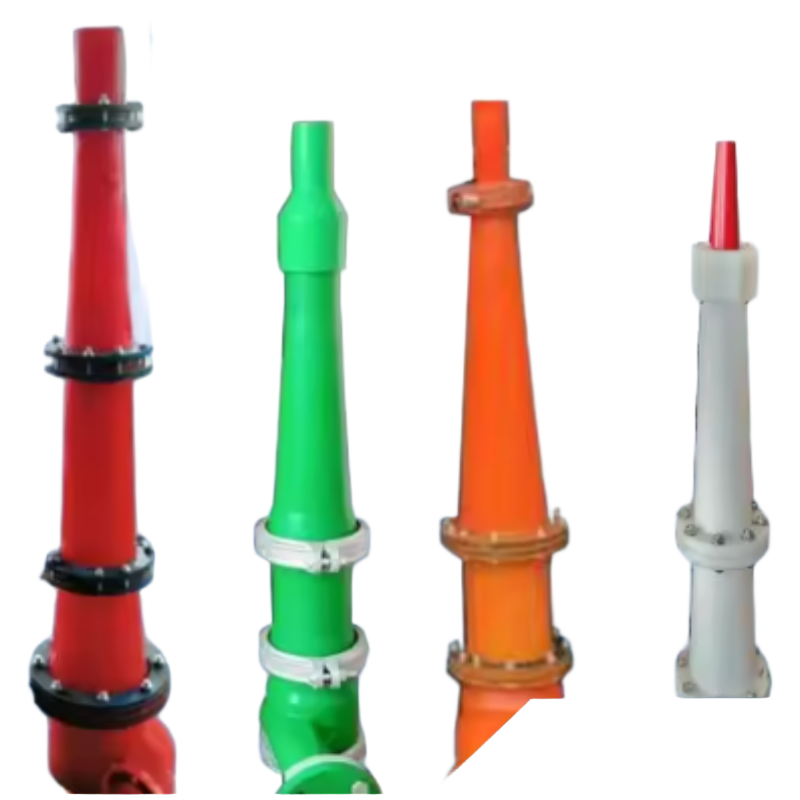
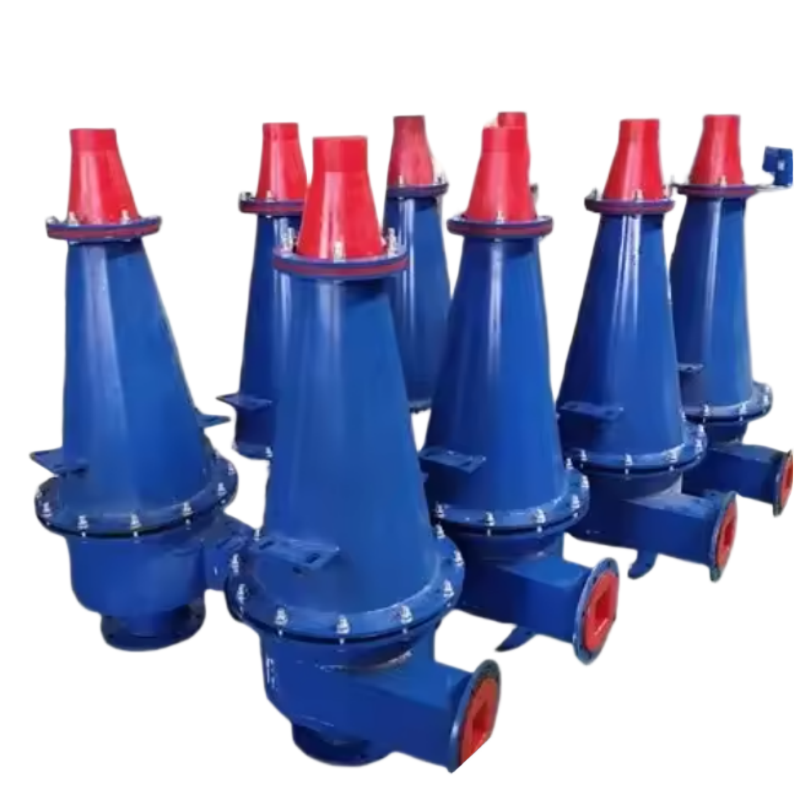
| Item | Description |
|---|---|
| Function | Particle classification and separation |
| Material | Polyurethane, Rubber, Ceramic, Steel |
| Application | Grinding circuits, classification, desliming, dewatering |
| Service Life | Depends on ore abrasiveness and liner material |
| Benefits | Improved recovery, reduced maintenance, stable operation |
A hydrocyclone is a classification device that uses centrifugal force to separate particles based on size and density. It is one of the most widely used pieces of equipment in mineral processing plants due to its simple structure, low operating cost, and high processing capacity.
Hydrocyclones are commonly installed in:
Gold Ore Processing Plants
Iron Ore Beneficiation Plants
Copper Ore Concentrators
Coal Preparation Facilities
Lithium Processing Operations
Silica Sand Plants
Lead Zinc Processing Plants
Nickel Ore Projects
Tailings Management Systems
They are often integrated with equipment such as:
Ball Mill
SAG Mill
Rod Mill
Jaw Crusher
Cone Crusher
Impact Crusher
Vibrating Screen
Dewatering Screen
Flotation Cell
Spiral Classifier
Filter Press
Conveyor Belt
[Hydrocyclone Internal Link]
Hydrocyclones operate by converting incoming slurry pressure into centrifugal force.
The slurry enters tangentially through the feed inlet, creating a high-speed vortex inside the cyclone body.
As the slurry rotates, heavier and coarser particles move toward the cyclone wall due to centrifugal force.
Lighter and finer particles migrate toward the center of the vortex.
The coarse fraction leaves through the underflow opening, commonly called the apex or spigot.
Fine particles move upward through the vortex finder and leave through the overflow outlet.
The hydrocyclone diameter directly influences:
Throughput Capacity
Cut Size (d50)
Classification Efficiency
Energy Consumption
Wear Rate
Maintenance Frequency
This is why hydrocyclone sizing is one of the most important engineering decisions in a mineral processing plant.
Many procurement teams ask suppliers for quotations based only on throughput requirements.
However, experienced mineral processing engineers know that throughput alone is not enough.
The following information should always be collected before selecting a hydrocyclone.
This is usually expressed as:
Tons Per Hour (TPH)
Cubic Meters Per Hour (m³/h)
Higher capacities generally require larger hydrocyclones or hydrocyclone clusters.
The desired particle separation size determines classification requirements.
For example:
| Target Application | Typical Cut Size |
|---|---|
| Fine Grinding | 20-75 μm |
| Gold Recovery | 50-150 μm |
| Iron Ore Classification | 75-200 μm |
| Tailings Processing | 100-300 μm |
Smaller cut sizes typically require smaller hydrocyclones.
Feed particle size strongly influences cyclone performance.
A hydrocyclone designed for coarse feed may perform poorly when processing ultrafine material.
Slurry density affects:
Classification Efficiency
Pressure Drop
Wear Rate
Throughput
Higher densities generally require more careful sizing calculations.
High solids concentration can:
Reduce separation efficiency
Increase wear
Affect cut size consistency
Stable feed pressure is essential.
Many field performance issues originate from pressure fluctuations rather than hydrocyclone design itself.
This is one of the most misunderstood aspects of hydrocyclone operation.
Typical Advantages:
Higher Throughput
Lower Pressure Requirements
Reduced Risk of Blockage
Typical Disadvantages:
Coarser Separation
Lower Classification Precision
Common Sizes:
500 mm
660 mm
840 mm
Applications:
Iron Ore
Coal
Tailings Management
Typical Advantages:
Finer Classification
Better Cut Size Control
Higher Separation Efficiency
Typical Disadvantages:
Lower Throughput
Increased Pressure Requirements
Common Sizes:
100 mm
150 mm
250 mm
Applications:
Gold Ore
Copper Ore
Lithium Ore
Instead of using one large hydrocyclone, many modern plants use multiple smaller hydrocyclones in a cluster arrangement.
Benefits include:
Better Process Control
Easier Maintenance
Higher Classification Efficiency
Operational Flexibility
Future Expansion Capability
Hydrocyclone clusters are now common in large gold and iron ore concentrators worldwide.
| Hydrocyclone Diameter | Typical Application |
|---|---|
| 100 mm | Fine Classification |
| 150 mm | Regrind Circuits |
| 250 mm | Gold Processing |
| 350 mm | General Mineral Processing |
| 500 mm | High-Capacity Grinding Circuits |
| 660 mm | Large Concentrators |
| 840 mm | Tailings and Bulk Processing |
However, hydrocyclone diameter alone should never be used as the primary selection criterion.
Actual process data must always be considered.
Choosing the right hydrocyclone size can significantly impact the performance of an entire mineral processing plant.
A correctly sized hydrocyclone ensures that coarse particles are directed to the underflow while fine particles report to the overflow. This improves grinding circuit stability and downstream recovery.
In a gold processing plant, improving classification efficiency can increase liberation rates and improve flotation performance.
When hydrocyclones operate within their design parameters, valuable minerals are more effectively separated and recovered.
A copper concentrator may experience improved flotation recovery after optimizing hydrocyclone sizing and feed pressure.
Improved classification reduces circulating loads in grinding circuits, allowing Ball Mills and SAG Mills to operate more efficiently.
Lower recirculating loads can reduce overall grinding energy consumption by 10–20%.
Correct sizing helps reduce excessive turbulence, pressure spikes, and particle impact, extending the service life of:
Hydrocyclone Liners
Vortex Finders
Apexes
Feed Chambers
This is especially important when processing abrasive materials such as Iron Ore, Silica Sand, and Nickel Ore.
Many buyers compare hydrocyclones with spiral classifiers when designing classification circuits.
| Factor | Hydrocyclone | Spiral Classifier |
|---|---|---|
| Footprint | Compact | Large |
| Capacity | High | Medium |
| Water Consumption | Lower | Higher |
| Classification Accuracy | Higher | Lower |
| Maintenance | Lower | Higher |
| Capital Cost | Medium | Higher |
| Automation | Easy | Limited |
| Best Application | Modern Grinding Circuits | Traditional Plants |
Most modern mineral processing plants prefer hydrocyclones due to higher efficiency, lower footprint requirements, and easier integration with automated systems.
Material selection is another important consideration.
| Feature | Polyurethane | Rubber |
|---|---|---|
| Wear Resistance | Excellent | Very Good |
| Elasticity | High | Excellent |
| Fine Particle Applications | Excellent | Good |
| Impact Resistance | Good | Excellent |
| Weight | Light | Medium |
| Maintenance Frequency | Lower | Medium |
| Service Life | Longer in Fine Abrasion | Longer in High Impact |
| Cost | Medium | Medium |
Recommended for:
Gold Ore Processing
Copper Ore Processing
Fine Classification
High-Wear Applications
Recommended for:
Coal Preparation
Coarse Particle Classification
High Impact Conditions
Ask:
What is the required throughput?
What cut size is needed?
What recovery target must be achieved?
Important parameters include:
Ore Type
Hardness
Abrasiveness
Density
Particle Size Distribution
Collect:
Feed Pressure
Slurry Density
Solids Concentration
Available Installation Space
Material selection affects:
Service Life
Downtime
Maintenance Costs
Spare Parts Consumption
Many successful mining projects include additional cyclone positions to accommodate future production increases.
| Problem | Possible Cause | Recommended Solution |
|---|---|---|
| Coarse Overflow | Oversized Hydrocyclone | Reduce Diameter |
| Fine Solids in Underflow | Low Pressure | Increase Feed Pressure |
| Roping | Excessive Solids Concentration | Reduce Solids Content |
| Excessive Wear | Abrasive Ore | Upgrade Wear Material |
| Low Throughput | Undersized Hydrocyclone | Increase Capacity |
| Unstable Operation | Pressure Fluctuation | Improve Pump Control |
| Frequent Blockage | Large Feed Particles | Improve Screening |
| Poor Separation | Incorrect Sizing | Recalculate Design Parameters |
Field experience shows that many hydrocyclone problems are caused by unstable operating conditions rather than equipment defects.
Regular maintenance improves performance and extends equipment life.
Check:
Feed Pressure
Overflow Condition
Underflow Pattern
Visible Wear
Inspect:
Apex Wear
Vortex Finder Condition
Feed Chamber Erosion
Evaluate:
Classification Efficiency
Pressure Stability
Wear Component Thickness
Mining operations should keep the following components in stock:
Apexes
Vortex Finders
Feed Chambers
Polyurethane Liners
Rubber Liners
This minimizes downtime during maintenance shutdowns.
Before requesting a quotation, prepare:
Ore Type
Throughput (TPH)
Particle Size Distribution
Slurry Density
Solids Concentration
Feed Pressure
Cut Size Requirement
Provide:
Existing Equipment Drawings
General Arrangement Drawings
Process Flow Diagram (PFD)
Piping Layout
If replacing existing equipment, provide:
OEM Model Number
Part Number
Existing Supplier Information
Typical Minimum Order Quantities:
| Product | MOQ |
|---|---|
| Hydrocyclone | 1 Unit |
| Vortex Finder | 2-10 Pieces |
| Apex | 5-20 Pieces |
| Polyurethane Liners | Depends on Model |
Typical manufacturing lead times:
Standard Hydrocyclones: 2–4 Weeks
Customized Hydrocyclones: 4–8 Weeks
Spare Parts: 1–3 Weeks
Recommended packaging:
Export Wooden Crates
Steel Frame Packaging
Moisture Protection
Available options:
Sea Freight
Air Freight
Express Courier
Multimodal Logistics
✔ Engineering Support
✔ Custom Design Capability
✔ Mining Industry Experience
✔ Quality Control System
✔ OEM Replacement Capability
✔ Spare Parts Availability
✔ Export Experience
✔ After-Sales Support
Iron Ore Concentrator
Throughput: 1,200 TPH
Abrasive Ore
High Solids Concentration
The plant experienced:
Poor Classification Efficiency
Excessive Wear
Frequent Maintenance Shutdowns
HUATAO supplied:
Polyurethane Hydrocyclones
Wear-Resistant Vortex Finders
Polyurethane Apexes
The hydrocyclone cluster design was optimized based on operating data.
Classification Efficiency Increased by 25%
Wear Life Improved by 2×
Maintenance Downtime Reduced by 30%
Annual Operating Cost Reduced Significantly
| Industry | Hydrocyclone Application |
|---|---|
| Gold Ore | Classification |
| Iron Ore | Grinding Circuit Control |
| Copper Ore | Flotation Feed Preparation |
| Coal | Desliming |
| Lithium Ore | Fine Classification |
| Silica Sand | Particle Separation |
| Lead Zinc | Grinding Circuit Classification |
| Nickel Ore | Mineral Recovery |
| Phosphate | Desliming and Classification |
| Tailings Management | Dewatering |
Most gold processing plants use 150 mm to 350 mm hydrocyclones, depending on throughput and target cut size.
Capacity depends on cyclone diameter, feed pressure, slurry density, and solids concentration.
Most mining applications operate between 5 and 20 psi, although exact values depend on design requirements.
Service life varies according to ore abrasiveness and operating conditions but is generally longer than standard rubber-lined alternatives in fine classification applications.
High solids concentration, oversized apexes, or unstable feed conditions are common causes.
Hydrocyclone clusters typically provide better flexibility, maintenance access, and operational control.
In most modern mineral processing plants, hydrocyclones have largely replaced spiral classifiers due to higher efficiency.
Provide ore type, throughput, slurry density, particle size distribution, feed pressure, and target cut size.
Selecting the correct hydrocyclone size is critical for achieving efficient classification, maximizing mineral recovery, and reducing operating costs. The best hydrocyclone solution balances throughput, cut size, slurry characteristics, wear resistance, and future production requirements.
By combining proper engineering design with high-quality wear-resistant components, mining operations can improve plant performance, extend equipment life, and reduce maintenance costs.
At HUATAO Group, we provide complete hydrocyclone solutions and mining wear parts for mineral processing operations worldwide, including Polyurethane Hydrocyclones, Rubber Hydrocyclones, Polyurethane Screen Panels, Rubber Screen Panels, Crusher Wear Parts, Mill Liners, Flotation Components, Classifier Shoes, and Conveyor Solutions.
Annie Lu | HUATAO Group
Email: annie.lu@huataogroup.com
Mobile / WhatsApp / WeChat:
+86 18032422676
Website:
www.tufflexscreen.com
Hydrocyclone, Polyurethane Hydrocyclone, Hydrocyclone Cluster, Mining Equipment, Mineral Processing, Classification Equipment, Gold Ore Processing, Iron Ore Beneficiation, Copper Ore Processing, Mining Wear Parts, Polyurethane Screen Panel, Rubber Screen Panel, Crusher Wear Parts, Ball Mill Liner, SAG Mill Liner
can not be empty
can not be empty

HUATAO GROUP - SCREENS
ADD : No.298 Zhonghua North Street, Shijiazhuang 050000 China.
TEL : +86 0311 80690567
EMAIL :market@huataogroup.com
Web: www.tufflexscreen.com
 WhatsApp & WeChat : +86 18033763037