Polyurethane Screen Panels: Essential Care Tips and Chemical Industry Suitability
Polyurethane (PU) screen panels are valued for their durability and wear resistance in material screening, but maximizing their performance requires proper maintenance and application-specific considerations. This guide outlines best practices for cleaning, storage, and operation while evaluating their viability in harsh chemical environments.
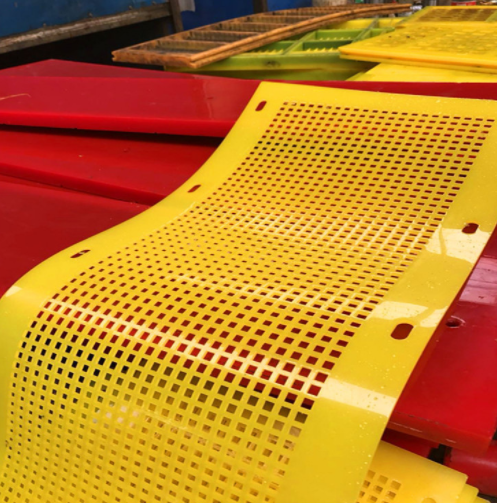
1. Maintenance Guidelines for Longevity
Cleaning Practices
- Gentle Cleaning: Use non-abrasive tools (soft cloths/sponges) and mild detergents. Avoid steel brushes or harsh chemicals (e.g., acids, alcohol-based solvents) that erode the PU surface.
- Chemical Compatibility: Always test cleaners on a small area first to prevent degradation.
Storage and Handling
- Flat, Dry Storage: Store panels horizontally on stable, non-slip surfaces to avoid warping. Ensure ambient humidity is low to prevent mold or material fatigue.
- No Heavy Loading: Avoid stacking panels or placing heavy objects on top, which can distort aperture shapes and reduce screening accuracy.
- Protective Transport: Use foam padding or wooden supports during transit to minimize impact damage.
Operational Recommendations
- Material-Specific Selection: Match panel type to material characteristics (e.g., fine mesh for powders, coarse apertures for granules).
- Vibration Control: Maintain recommended vibration frequencies to avoid stress on the frame and fasteners.
- Load Management: Never exceed the stated weight capacity to prevent tears or structural failure.

2. Suitability in Chemical Industry Applications
While PU screens perform well in general industries, chemical processing environments pose unique challenges:
Key Challenges
- Corrosion Risks: PU resists moderate chemicals but may degrade in prolonged contact with strong acids (e.g., sulfuric acid) or alkalis (e.g., sodium hydroxide).
- Temperature Limits: Standard PU panels operate best at ≤80–100°C (176–212°F). Higher temperatures (e.g., in refining or polymerization processes) can cause softening or chemical breakdown.
- Pressure Sensitivity: High-pressure screening systems (e.g., in pharmaceutical or petrochemical applications) may require reinforced PU or alternative materials.
Safety and Alternative Solutions
- Risk Mitigation: Regularly inspect panels for signs of corrosion (e.g., discoloration, brittleness) in chemical environments.
- Material Upgrades:
- Stainless Steel Screens: Ideal for high-temperature, high-pressure scenarios (e.g., chemical reactors).
- Ceramic/Composite Panels: Offer superior resistance to extreme corrosion (e.g., in battery recycling or acid mining).
3. When to Choose Polyurethane vs. Alternatives
| Application Scenario |
PU Screen Panels |
Alternative Materials |
| General industrial screening |
Recommended (cost-effective, low maintenance) |
Not necessary |
| Mild chemical environments |
Use with caution; monitor corrosion |
Consider PU with anti-corrosion additives |
| High heat/pressure/chemicals |
Not suitable |
Stainless steel, ceramic composites |
Conclusion
Polyurethane screen panels are a versatile choice for most screening needs, but their effectiveness in chemical industries hinges on environmental factors. Proper maintenance (gentle cleaning, controlled storage) extends their lifespan, while harsh conditions demand specialized materials. Always consult manufacturers to align panel selection with specific operational requirements.
Contact Huatao Group for custom PU screen solutions or corrosion-resistant alternatives: annie.lu@huataogroup.com | www.tufflexscreen.com


 WhatsApp & WeChat : +86 18033763037